🌪️ Storm, flood or fire emergency in Tuscaloosa? We answer 24/7 — call (205) 539-5453
📚 Restoration Guide
How to Prevent Mold in Alabama’s Humid Climate
To prevent mold in Alabama’s humid climate, keep indoor humidity below about 50%, fix leaks fast, ventilate bathrooms and kitchens, and dry any wet area within 24 to 48 hours. Mold spores are always in the air, but they only take hold when moisture lingers. In Tuscaloosa, controlling that moisture is the entire game.
Homeowners across Tuscaloosa, Northport, and Cottondale ask us the same question every summer: why does mold keep coming back? The answer is our climate. This guide walks through the exact steps that stop mold before it starts, plus what to do when you already see it.
Why Alabama humidity fuels mold growth
West Alabama sits in a warm, moisture-heavy corridor for much of the year. Summer dew points stay high, and even mild spring and fall days trap dampness indoors. That combination is ideal for mold.
Mold needs three things to grow: moisture, a food source, and time. Drywall, wood, carpet, and dust all feed it. In a humid Tuscaloosa home, the moisture is the easy part to control, and it is the one factor you can actually manage year round.
Warm air holds more water vapor than cool air. When that humid air meets a cooler surface, like a bathroom wall or a crawlspace beam, it condenses. Those quiet, damp surfaces are where colonies begin.
The prevention steps, in order
Follow these steps in sequence. The earlier ones deliver the biggest results, and the whole system works best together.
Control indoor humidity. Run your air conditioning and add dehumidifiers where needed to hold indoor humidity between 30% and 50%. Your AC is your first line of defense in a Tuscaloosa summer.
Fix leaks quickly. A slow pipe drip, a worn roof flashing, or a sweating supply line feeds mold for weeks before you notice. Repair leaks the day you find them.
Ventilate wet rooms. Use exhaust fans in bathrooms and kitchens, and run them for at least 20 minutes after showering or cooking. Open a window when the outside air is dry.
Dry any water within 24 to 48 hours. This window matters more than anything else. Mold can begin growing on damp materials within one to two days.
Maintain gutters and grading. Keep gutters clear and make sure the ground slopes away from your foundation, so rain drains off instead of pooling against the house.
Watch crawlspaces and attics. Check these hidden spaces seasonally for standing water, damp insulation, or a musty smell that signals trapped moisture.
None of these steps require special products. They require attention, and a willingness to act fast when moisture shows up.
Humidity targets and how to measure them
The goal is simple: keep relative humidity between 30% and 50% indoors. Above roughly 60%, mold risk climbs sharply, which is why bare summer numbers in an unconditioned Tuscaloosa home are a problem.
You cannot manage what you do not measure. Buy an inexpensive hygrometer and place one in the rooms that matter: a bathroom, a basement or crawlspace access, and a main living area. Check the readings weekly during humid months.
If a room reads above 55%, increase airflow, run a dehumidifier, or lower the AC setpoint. Empty and clean dehumidifier reservoirs regularly so they do not become a moisture source themselves.
Rule of thumb: if your windows fog, your air feels sticky, or a room smells earthy, your humidity is too high. Act before you see visible growth.
High-risk spots in a Tuscaloosa home
Mold does not appear randomly. It targets the same damp, poorly ventilated areas in nearly every home we inspect around Tuscaloosa and Northport. Knowing these spots lets you focus your prevention effort.
Room or area
Prevention tip
Bathroom
Run the exhaust fan during and after every shower; wipe down wet walls.
Kitchen
Vent cooking steam outside and repair any leaks under the sink promptly.
Crawlspace
Keep it dry with a vapor barrier; watch for standing water after rain.
Attic
Ensure good ventilation and check for roof leaks around vents and valleys.
Laundry room
Vent the dryer outdoors and inspect washer hoses for slow drips.
Basement or ground floor
Run a dehumidifier and keep grading sloped away from the walls.
Windows and closets
Reduce condensation with airflow; avoid stacking damp items against walls.
What to do if mold already appears
Small surface spots on a non-porous surface, like tile grout or glass, can often be cleaned and dried. The key is finding and fixing the moisture source, because cleaning alone will not stop regrowth.
Larger patches, a musty smell you cannot trace, or growth on drywall and framing are different. Porous materials can hold hidden colonies behind the surface. If you spot dark staining spreading across a wall, learn the signs of mold in walls and stop guessing.
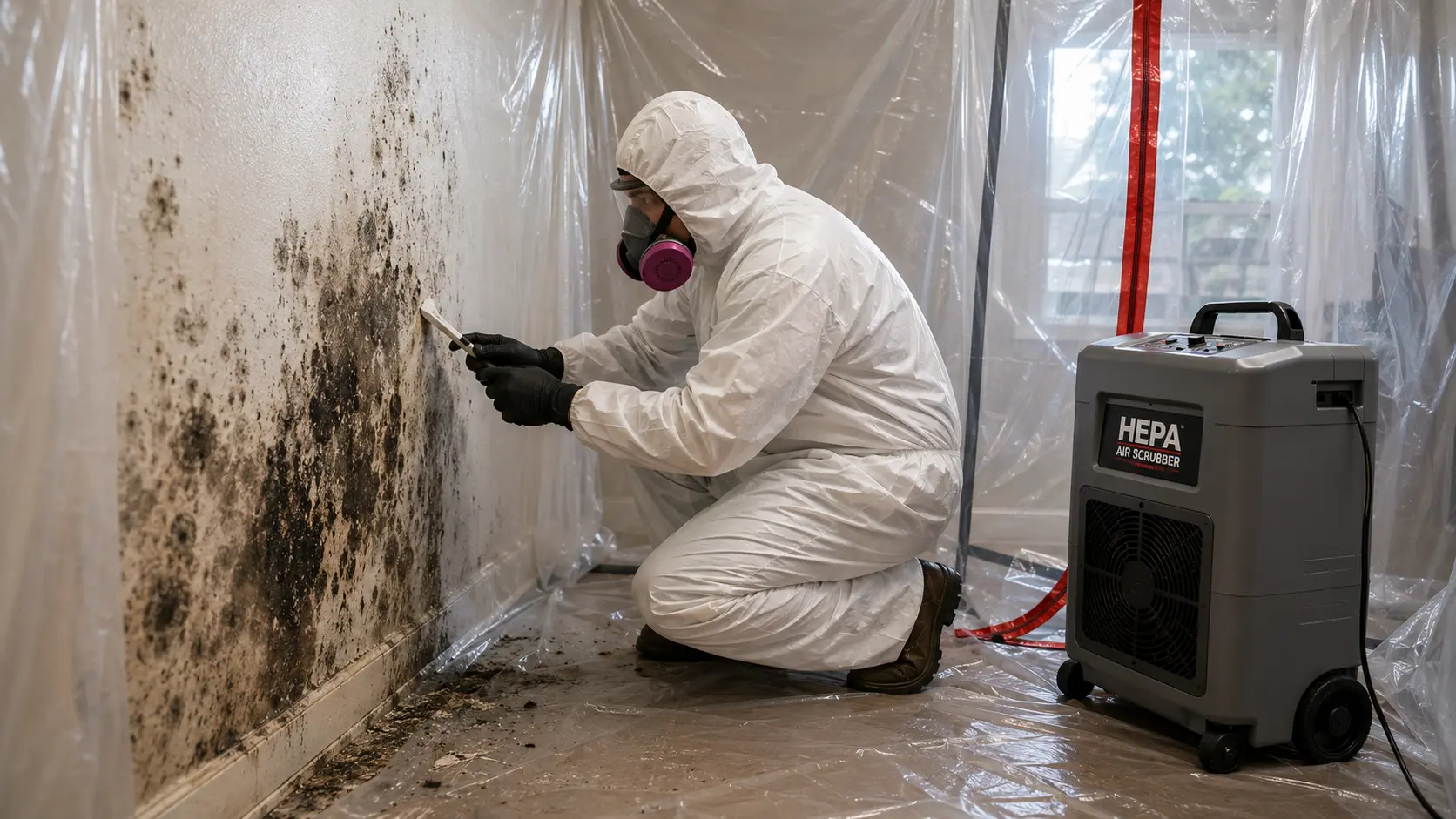
Do not paint over mold or scrub aggressively at a large patch, which can release spores into the air. When growth covers more than a small area, professional mold remediation in Tuscaloosa is the safe path.
Why fast water cleanup is the best mold prevention
Every mold job we handle traces back to water that sat too long. A burst pipe, a storm leak, or an overflowing appliance can soak materials in minutes, and mold follows within a day or two.
That is why rapid extraction and drying is the single most effective mold prevention step after a spill or flood. Removing standing water and drying the structure inside that 24 to 48 hour window often prevents mold entirely.
Call for help when mold covers a large area, keeps returning, hides behind walls, or follows a water event you could not fully dry. These situations need moisture mapping, containment, and proper removal.
Druid City Restoration serves Tuscaloosa, Northport, Cottondale, Alberta, and Holt with 24/7 availability, free inspections, and full mold remediation, extraction, drying, and cleanup. Where your policy allows, we can bill your insurer directly to simplify the process.
If you are unsure whether what you see is a real problem, reach out. Call (205) 539-5453 or use our contact page, and we will take a look before it spreads.
Mold Prevention FAQs
What indoor humidity level prevents mold in Alabama?
Keep indoor relative humidity between 30% and 50%. Mold risk rises sharply above about 60%, which is common in an unconditioned Tuscaloosa home during humid months.
How fast does mold grow after water damage?
Mold can begin growing on damp materials within 24 to 48 hours. That is why drying wet areas quickly is the most important prevention step.
How do I measure the humidity in my home?
Use an inexpensive hygrometer. Place one in the bathroom, near a crawlspace or basement, and in a main living area, then check the readings weekly during humid months.
Does running my air conditioner help prevent mold?
Yes. Air conditioning removes moisture from the air and lowers humidity, making it your first line of defense against mold in a hot, humid Tuscaloosa summer.
Can I clean small mold spots myself?
Small surface spots on non-porous surfaces like tile or glass can often be cleaned and dried. You must also fix the moisture source, or the mold will return.
When should I call a professional for mold?
Call a professional when mold covers a large area, keeps returning, hides behind walls, or follows a water event you could not fully dry. These cases need proper containment and removal.
Which areas does Druid City Restoration serve?
We serve Tuscaloosa, Northport, Cottondale, Alberta, and Holt. Call (205) 539-5453 for a free inspection.
After heavy rain or flooding in Tuscaloosa, stay safe first: never walk or drive through floodwater, keep the power off in wet rooms, and treat all standing water as contaminated Category 3 “black water.” Once it is safe, document everything for insurance, start drying the structure as fast as possible, and call a professional restoration […]
In the first 24 hours after a house fire in Tuscaloosa, safety comes first: do not re-enter the home until the fire department clears it, then contact your insurer, document everything with photos, and secure the property against weather and intruders. Avoid touching soot, running the HVAC, or using appliances, because early mistakes lock in […]
A sewage backup is a health emergency, not a plumbing inconvenience: stop using all water, keep people and pets away from the contaminated area, and call trained cleanup professionals right away. Raw sewage is classified as Category 3 “black water” and carries pathogens that can make your family sick within hours. In Tuscaloosa, we can […]
Water damage is sorted into three categories: Category 1 (clean water), Category 2 (gray water), and Category 3 (black water). The categories describe how contaminated the water is, not how much of it there is. Knowing the category shapes how a Tuscaloosa home is cleaned, what can be saved, and how insurers handle the claim. […]
How long does water damage restoration take? In Tuscaloosa, AL structural drying runs ~3-5 days, minor jobs 24-48 hours, and full repairs 1-2 weeks. See the phase-by-phase timeline and what slows it down.
Learn the 7 signs of mold hiding inside your walls — musty odor, black spots, bubbling paint, soft drywall and more. A Tuscaloosa, AL guide to Deep-South humidity, crawl-space mold and when to call a pro. Call (205) 539-5453.