🌪️ Storm, flood or fire emergency in Tuscaloosa? We answer 24/7 — call (205) 539-5453
📚 Restoration Guide
Sewage Backup in Your Home: Health Risks & What to Do First
A sewage backup is a health emergency, not a plumbing inconvenience: stop using all water, keep people and pets away from the contaminated area, and call trained cleanup professionals right away. Raw sewage is classified as Category 3 “black water” and carries pathogens that can make your family sick within hours. In Tuscaloosa, we can walk you through the first steps by phone at (205) 539-5453 and dispatch help around the clock.
Few household disasters feel as overwhelming as sewage coming up through a floor drain, toilet, or basement in your Tuscaloosa home. Beyond the smell and mess, the water itself is genuinely dangerous. This guide explains why sewage is so hazardous, what to do in the first hour, what usually causes backups, and how to lower your risk before the next heavy Alabama rain.
Why sewage backup is dangerous: Category 3 black water
Restoration professionals sort water damage into three categories based on how contaminated the water is. Category 1 is clean water from a supply line. Category 2 is “gray water” from appliances that carries some contamination.
Sewage falls into Category 3, known as “black water.” This is the most hazardous class, and it includes anything that has touched raw sewage or backed up from beyond a toilet trap.
Black water is loaded with bacteria, viruses, and parasites. Documented risks in raw sewage include E. coli, Salmonella, hepatitis A, and rotavirus, along with harmful fungi and gases. Because these pathogens can spread through direct contact, contaminated air, and cross-contaminated surfaces, Category 3 water is treated as an active health threat rather than a simple cleanup job.
What to do in the first hour
Your actions in the first hour protect your health and limit how far the contamination spreads through your Tuscaloosa home. Work carefully, and never wade into standing sewage without protection.
Stop using water. Do not flush toilets, run sinks, or start the dishwasher or washing machine. Every gallon you send down the drain can push more sewage into your home.
Keep people and pets away. Close off the affected room and keep children and animals well clear of the contaminated area.
Kill the power if it is safe. If water is near outlets or appliances and you can reach the breaker without stepping in water, turn off electricity to that area.
Open windows for ventilation. Sewage gases can build up, so let fresh air move through if the weather allows.
Do not touch contaminated items bare-handed. If you must move something urgent, wear rubber gloves, boots, and eye protection, then wash thoroughly.
Document the damage. Take photos and video for your insurer before anything is cleaned or removed.
Call restoration professionals. Reach us at (205) 539-5453 for 24/7 help and a free inspection so cleanup can start quickly.
Never try to “mop up” raw sewage yourself. Even a small backup can contaminate porous materials and air, and the health risk to your family is not worth it.
Common causes of sewage backups in Tuscaloosa
Understanding what caused the backup helps prevent the next one. Most residential sewage problems trace back to a handful of familiar culprits.
Solid clogs from paper products, hygiene items, and foreign objects flushed down toilets.
Grease buildup from kitchen drains that hardens inside pipes and narrows the flow.
“Flushable” wipes, which do not break down and are a leading cause of clogged lines despite the label.
Tree roots that invade older sewer laterals through tiny cracks and joints.
Aging or collapsed pipes, common in older Tuscaloosa and Northport neighborhoods with clay or cast-iron lines.
City main overload during heavy rain. Alabama’s intense downpours can flood the municipal system, and when the public main backs up, sewage can be forced back into homes through the lowest drains.
That last cause is especially common across Tuscaloosa, Cottondale, Alberta, and Holt. When storms dump inches of rain in a short span, the sewer system can be pushed past capacity, and low-lying properties feel it first.
Salvageable vs. must-remove: what can be saved
After a sewage backup, some items can be cleaned and disinfected, while porous materials that soaked up black water usually have to go. The table below is a general guide; a professional assessment decides the final call.
Often salvageable
Usually must remove
Sealed hardwood and tile floors
Carpet and carpet padding
Solid wood furniture (hard, non-porous)
Upholstered furniture and mattresses
Metal and hard plastic items
Drywall touched by sewage
Glass, ceramics, and dishware
Insulation that got wet
Non-porous countertops
Particleboard and laminate that swelled
The key factor is how porous the material is. Anything that absorbs contaminated water and cannot be fully disinfected is generally discarded to protect your family’s health.
Health symptoms to watch for after exposure
Contact with sewage, or even breathing air in a contaminated space, can cause illness. Watch yourself and your family for warning signs in the days after a backup.
Nausea, vomiting, or diarrhea
Stomach cramps and fever
Skin rashes or irritation from contact
Eye irritation and headaches
Respiratory symptoms, such as coughing or wheezing
People with weakened immune systems, young children, and older adults face higher risk. If symptoms appear after exposure, contact a medical provider and mention the sewage contact so they can factor it in.
What professional sewage cleanup includes
Professional cleanup is about more than removing water. The goal is to make your Tuscaloosa home safe, dry, and free of contamination down to surfaces you cannot see.
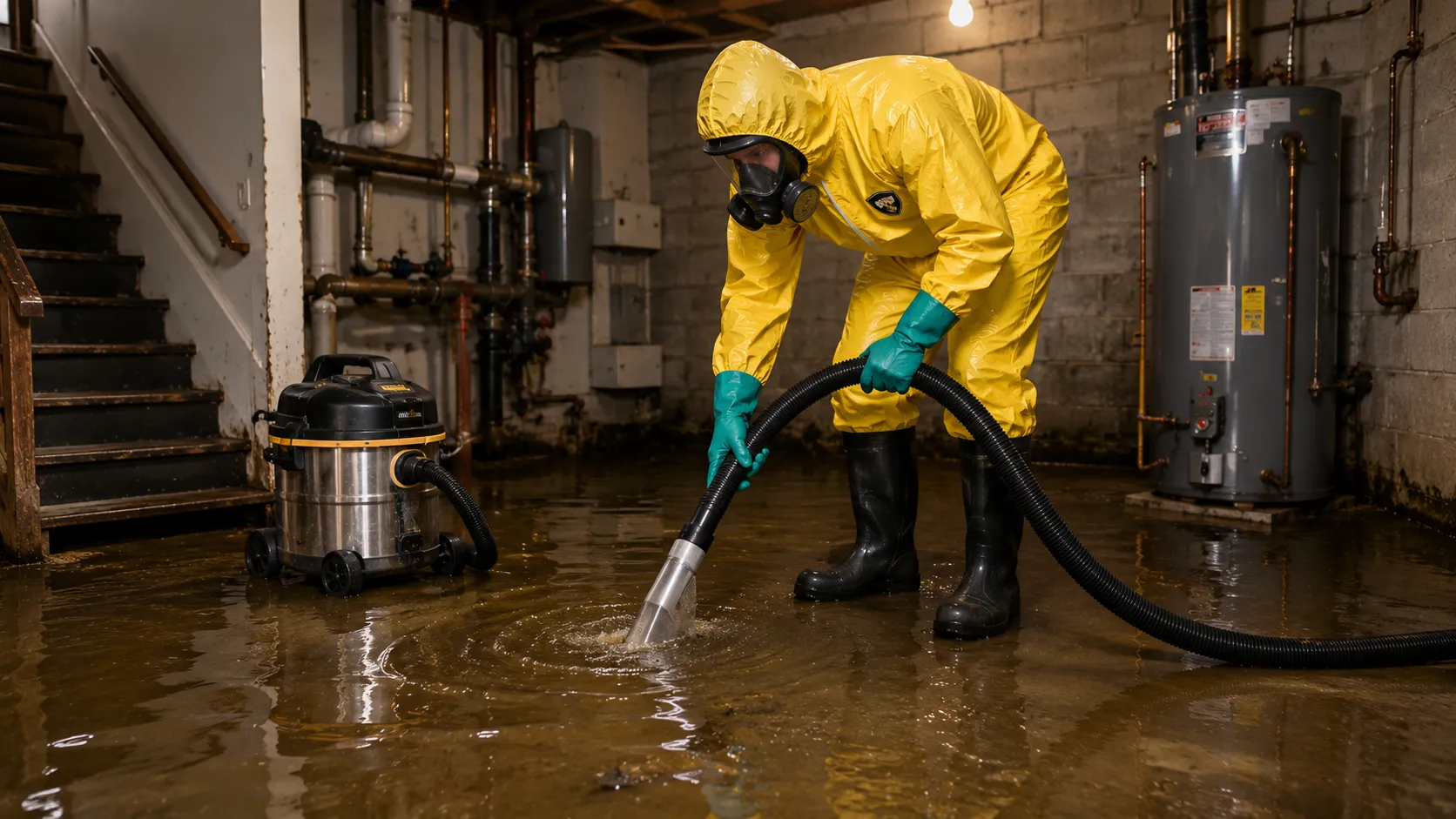
Our process starts with a free inspection to map the extent of the damage. From there, we handle extraction of standing sewage, removal of unsalvageable materials, and thorough disinfection of affected surfaces.
We also focus on drying and deodorizing so moisture and odor do not linger and invite mold growth later. Because sewage backups often overlap with broader water damage restoration needs, we address the water source and moisture at the same time. Where your policy allows, we can bill your insurer directly to reduce the paperwork you deal with. Learn more about our full sewage cleanup in Tuscaloosa or contact us to get started.
Prevention and insurance
You cannot control a city main overload, but you can make your home more resilient before the next heavy Alabama rain. A licensed plumber can install a backwater valve that blocks sewage from flowing back into your home when the public system is overwhelmed.
Simple habits help, too. Never flush wipes, even “flushable” ones, keep grease out of kitchen drains, and have older sewer lines inspected for root intrusion. If you notice damp spots or musty smells afterward, check for signs of mold in your walls early.
On the insurance side, be aware that standard homeowners policies often do not cover sewer backups by default. Coverage usually requires a separate sewer or water-backup endorsement, so review your policy now rather than after a loss. A quick call to your agent can confirm whether you are protected across Tuscaloosa, Northport, and the surrounding areas.
Sewage Backup FAQs
Is a sewage backup a health emergency?
Yes. Raw sewage is Category 3 black water that carries dangerous pathogens, so you should keep people and pets away and call cleanup professionals right away.
Can I clean up a sewage backup myself?
It is not recommended. Sewage contaminates porous materials and the air, and safe cleanup requires protective gear, proper disinfection, and correct disposal that professionals are equipped to handle.
What diseases can raw sewage cause?
Sewage can contain organisms linked to illnesses such as E. coli infection, Salmonella, hepatitis A, and rotavirus, which is why exposure can cause stomach and other symptoms.
Why do sewage backups happen during heavy rain in Alabama?
Intense Alabama downpours can overload the city sewer main, and when the public system backs up, sewage can be forced into homes through the lowest drains.
What items usually have to be thrown away?
Porous items that soaked up sewage, such as carpet, padding, upholstered furniture, mattresses, and affected drywall and insulation, usually must be removed because they cannot be fully disinfected.
Does homeowners insurance cover sewage backups?
Often not by default. Coverage usually requires a separate sewer or water-backup endorsement, so it is worth reviewing your policy with your agent before a loss occurs.
How can I prevent future sewage backups?
A backwater valve installed by a licensed plumber can block backups during overloads, and avoiding flushed wipes, keeping grease out of drains, and inspecting old lines all help.
Do you offer help in Northport and Cottondale?
Yes. We serve Tuscaloosa, Northport, Cottondale, Alberta, and Holt with 24/7 availability and free inspections. Call (205) 539-5453 to reach us.
After heavy rain or flooding in Tuscaloosa, stay safe first: never walk or drive through floodwater, keep the power off in wet rooms, and treat all standing water as contaminated Category 3 “black water.” Once it is safe, document everything for insurance, start drying the structure as fast as possible, and call a professional restoration […]
To prevent mold in Alabama’s humid climate, keep indoor humidity below about 50%, fix leaks fast, ventilate bathrooms and kitchens, and dry any wet area within 24 to 48 hours. Mold spores are always in the air, but they only take hold when moisture lingers. In Tuscaloosa, controlling that moisture is the entire game. Homeowners […]
In the first 24 hours after a house fire in Tuscaloosa, safety comes first: do not re-enter the home until the fire department clears it, then contact your insurer, document everything with photos, and secure the property against weather and intruders. Avoid touching soot, running the HVAC, or using appliances, because early mistakes lock in […]
Water damage is sorted into three categories: Category 1 (clean water), Category 2 (gray water), and Category 3 (black water). The categories describe how contaminated the water is, not how much of it there is. Knowing the category shapes how a Tuscaloosa home is cleaned, what can be saved, and how insurers handle the claim. […]
How long does water damage restoration take? In Tuscaloosa, AL structural drying runs ~3-5 days, minor jobs 24-48 hours, and full repairs 1-2 weeks. See the phase-by-phase timeline and what slows it down.
Learn the 7 signs of mold hiding inside your walls — musty odor, black spots, bubbling paint, soft drywall and more. A Tuscaloosa, AL guide to Deep-South humidity, crawl-space mold and when to call a pro. Call (205) 539-5453.